Last week I delivered the opening keynote at the Graduate Employability: Insights to Impact Forum hosted by Swinburne on how generative and agentic AI are reshaping early-career work, and how industry, universities and students can be better prepared for it. I’ve had a few days to reflect, and I’m ready to share some thoughts.
The dominant media-driven narratives remain polarised. Either AI will eliminate graduate jobs (“the graduate jobpocalypse!”, “a robot stole my internship!”), or the AI bubble will burst, forcing a dramatic correction, a decline in organisational use, and the re-hiring of all the graduates we replaced with robots.
Clear-eyed analysis of evidence emerging from my employer survey research in Australia, international workforce analyses out of Stanford and Harvard, and recent graduate outcomes data suggests a far more complex picture — one that requires a nuanced and collaborative response.
In the United States, entry-level roles in many professional areas are in decline, partly attributable to AI adoption. In Australia, we can see the beginning of possible declines in graduate opportunities in bellwether disciplines like IT and law. However, my research with Australian employers suggests AI adoption is uneven. Its impact varies by sector, regulatory context, organisational size, leadership preference and task profile. Across these differences, however, some structural shifts are becoming clearer.
Routine, programmable tasks are declining. Expectations around judgement, oversight, integration and complex human interaction are rising — often far earlier in career trajectories than before. Entry-level roles are becoming broader, more cognitively demanding and less scaffolded. For instance, entry-level supply chain and logistics professionals are being asked to problem-solve anomalies and exceptions rather than beginning their careers with foundational data updating, reporting and compliance tracking.
Entry-level workforce shifts are happening, but I’m not seeing a jobpocalypse.
Many of us will have heard stories of organisations keen to take advantage of perceived AI efficiencies, moving quickly to adopt AI and reducing graduate hiring. Now, with greater AI maturity and clearer insights into organisational capability, public reporting suggests IBM and others are making more room for entry-level roles again.
For decades, many organisations have relied on pyramid-shaped workforce models, where early-career roles were places to perform straightforward tasks and also provided protected space in which tacit knowledge and professional judgement could be formed. When AI is introduced primarily as a tool for automation, without redesigning those developmental pathways, capability formation becomes compressed. We begin to see the emergence of more “diamond-shaped” structures, with fewer entry points and heavier reliance on mid-career expertise.
This approach may improve short-term efficiency (though, as I’ll share below, mounting evidence suggests otherwise). It certainly does not support long-term capability sustainability, and many organisations are now recognising this.
A very recent workflow study from Stanford examined software development workflows and tasks performed by AI and people. It found that full automation — for example, “write the code for this app” or “write the analytical report for Y” — often introduces significant inefficiencies through human checking and rework at the end. By contrast, where humans retain oversight and use AI to augment defined components of work within a workflow (staying in control and delegating programmable sub-steps such as data cleaning or boilerplate code), productivity gains are much stronger.
The study found that the automation approach resulted in an 18% productivity decline, while the augmentation approach resulted in a 24% productivity increase.
For educators, these findings shift the conversation beyond AI literacy.
Graduates do need technical capability and AI literacy (“how to get AI to do what I need and ensure the output is high quality”). More critically, however, they require AI fluency: the capacity to use AI for augmentation — knowing when to use it and when not to — exercising domain judgement, interrogating outputs, understanding limitations, integrating ethical reasoning, and achieving the best overall outcome possible.
As one industry panellist at the forum observed:
“AI isn’t replacing human judgement. It’s making the absence of judgement more visible.”
The question for universities is how we integrate these fluencies into our courses, even as industry is concurrently working out how best to augment rather than automate with AI — and as AI capability itself continues to advance rapidly. This is a strong signal that we need to move away from legacy, slow-moving “curriculum in boxes” towards more advanced forms of authentic learning and teaching. Further, we need to go beyond episodic industry engagement to deep, reciprocally beneficial partnerships, collaborating to redesign the way professional capability is developed and talent pipelines are formed.
We can’t get away with tinkering at the edges of curriculum. This is a deep design challenge to which higher education and industry need to commit.
TLDR: My Australian National Senior Teaching Fellowship report is now out and available for download. My fellowship explores the roles that social networks play in graduate employability, and how universities can foster social network capability through interventions at curricular, pedagogic, and organisational levels.
My fellowship findings and resources will be of interest to Australian university leaders who are developing strategies in response to the National Priorities and Industry Linkage Fund, and to educators who are designing or reviewing degree programs.
Readers can access the connectedness reflection tool for educators for free. I also offer facilitated sessions to support educators with curriculum development and review, and strategic industry partnership development. Please get touch if you’d like to find out more.
Full article:
As many of you know, I’m interested in how education can ensure that learners are prepared for the future (and increasingly the now!) of life and work. Some of my research is about the capabilities that individuals can develop – so-called ’21st century’ skills, and the learning & teaching approaches that foster these. But I am also interested in other factors involved in future-capability, beyond individual skills.
For the last five years, through my Australian National Senior Teaching Fellowship Graduate Employability 2.0, along with a range of other research grants, I have been exploring how individuals, educators and educational institutions can enhance and make the most of social networks for learning and career success. I’ve discovered this goes far beyond ‘networking’ and having a polished LinkedIn profile.
How can individuals benefit from social networks?
My research suggests that there are at least three ways in which individuals can benefit from social connectedness in 21st century careers. They are:
(1) networks for career development (the one we usually think of) – activating social networks for career development through mentorship, access to resources or opportunities
(2) networks for learning – learning new skills by collaborating with others, or by sourcing information, knowledge or capabilities from others
(3) networks for innovation and problem-solving – solving problems or creating new knowledge by collaborating with, or sourcing information, knowledge or capabilities from, others, particularly those from a different discipline or context
Developing and using networks for learning and innovation / problem solving are centrally important to how 21st century society works.
What does higher education need to do?
Both the capabilities needed for social networks and the social networks themselves can, and should, be developed through higher education. The good news is that over the last few years universities have started to appreciate the roles that networks play in student career development and graduate employability. More and more students are learning the basics of networking for career development while they are undergraduates, which sets a good foundation for social network development over time.
However, learning, problem solving and innovation through social networks are still much less likely to be included in curricula. Since last year much teaching has moved online, but students are still being allocated into teams of 4 with their same-discipline course peers (in a break-out room in Zoom or Teams) to engage in learning. This approach is useful for some outcomes, but it doesn’t get at the real scenarios, processes and outcomes through which graduates will end up adding value.
There are some great exemplars of authentic and ‘free-range’, interdisciplinary and socially networked learning out there — e.g., some kinds of work integrated learning, enterprise and entrepreneurship learning, and research-based learning experiences. I cheer internally every time I hear about one. But this learning is by no means ubiquitous.
The main reasons seem to be that while valuable, it can be more resource-intensive and risky to deliver than classroom-based learning, challenging to arrange logistically and financially, and difficult to assess.
What next steps can educators take?
For social network-based learning to occur effectively and consistently, certain educational elements relating to curriculum, pedagogy and layers of institutional connectedness need to line up. You can access the connectedness reflection tool for educators for free to start to characterise the strengths and opportunities of your program, School, or institution.
More broadly, educational programs and institutions need to be well-connected with their communities and social ecosystems, something which many universities still struggle with. My research interviewees described the university either as a ‘walled garden’ or a series of siloes – neither of which support social network-based learning. My book Higher Education and the Future of Graduate Employability – A Connectedness Learning Approach deals with these issues in more detail, including some case studies from different institutions.
For more information
I encourage readers to check out my fellowship resources:
I also offer facilitated sessions to support educators with curriculum development and review, and strategic industry partnership development. Please get touch if you’d like to find out more.
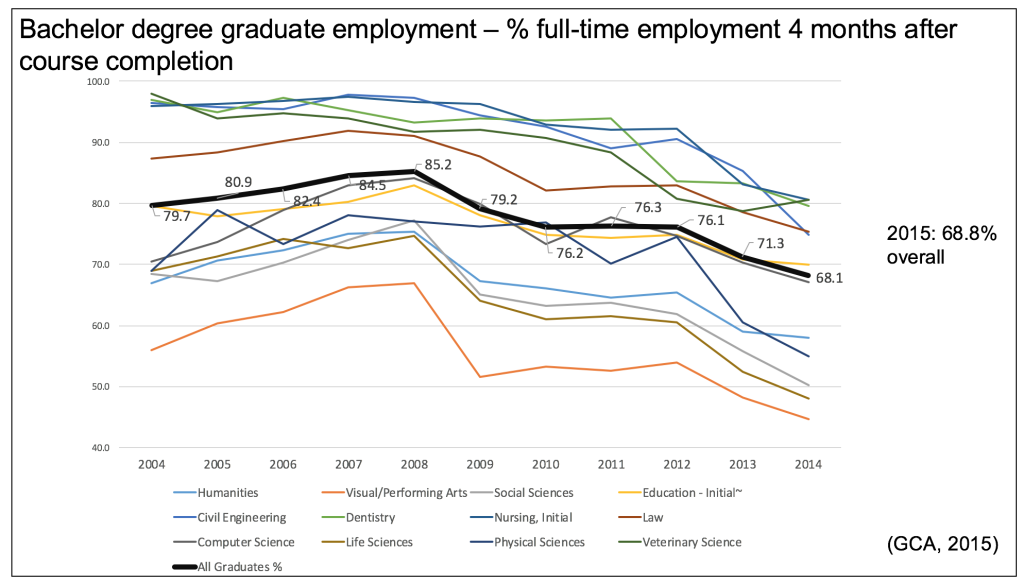
Recently, Australian universities have become highly concerned about graduate employability, and how to ensure that our graduates have positive career outcomes. It’s not that we didn’t care about this before — but recent graduate outcome statistics show that that chances of students gaining full-time employment after graduation are declining in all disciplines, and have been for a few years now. University education represents a signficant investment for students, both in terms of time and effort and course fees, and increasingly want to know that there will be a job for them at the end.
The chief metric that the higher education sector uses to demonstrate positive outcomes is full-time employment 4 months post course completion. This metric comes from graduate surveys known as the Graduate Destintation Surveys (GDS), until recently administered by Graduate Careers Australia.
Under the new QILT (Quality Indicators in Learning and Teaching) system, there are a range of other indicators as well — including a survey of graduate employers asking about graduate employees’ capabilities. There is also a ‘3-year out’ survey of graduate outcomes. The QILT website allows people to compare courses and universities using these indicators. However, the chief metric that is reported and used is still the short-term full-time employment metric, along with median graduate salary.
The short-term full-time employment metric can be useful as an indicator in some respects. For instance, Tom Karmel of the National Institute of Labour Studies, has recently used the GDS to show that more than 50% of the variance in declining graduate outcomes is due to a softening labour market and an oversupply of graduates, particularly in some fields. This has been exacerbated by the introduction of the ‘demand driven system’, and uncapping the number of university places that can be offered in Australia*. The sector is on track to meet its 40% university participation by 2020 target.
Another example of an interesting use of the graduate destination full-time employment metric comes from Denise Jackson from Edith Cowan University, who demonstrated the importance of social capital to initial graduate outcomes, also using statistical modelling of the GDS survey data (in her 2014 study, there was a 54% increase in the chances of full-time job attainment if social network strategies were used).
However, the full-time employment metric we use is problematic in important ways. I summarise these issues as: (i) full-time employment as an employee, (ii) employment is different from employability; and (iii) short-term, narrow outcomes.
1. Full-time employment as an employee. The metric has long been criticised by educators in the arts and creative industries, where the portfolio career (multiple job-holding, self-employment) is ubiquitous – as, of course, is underemployment. But in fields where self-employment and multiple job-holding are common, the ‘full-time employment as an employee’ metric does seem less relevant**. It also might be less relevant across the board in coming years as the traditional organisational career continues to decline, and more and more people are engaged in self-managed, portfolio careers. There is evidence that this is occurring already: while Australia’s overall unemployment rate is steady, the rate of part-time and short-term work overall, and casual jobs for young people 18-24, is increasing. Eighty-six per cent of the new jobs created in Australia last year were part-time. Across OECD nations, 20% of all jobs terminate within one year, and 33% terminate within 3 years. In the US, 40% of work is contingent.
There are also the phenomena of ‘uberisation’ of work, and the start-up economy. While self-employment is actually declining across Australia (according to ABS statistics), more and more people are engaged in informal, self-generated and distributed models of work and income earning through platforms such as Uber, Airtasker (Upwork in the US), and AirBnB. There is also much talk and policy about fostering a start-up economy, particularly in STEM fields, as a way to promote economic growth and social well-being in Australia. It seems that historically, an entrepreneurial career path has not often been chosen by recent graduates, and entrepreneurship is something that tends to be adopted with greater career experience – but it is something that is increasingly being encouraged.
My overall point is this: The national graduate outcomes data collection is the only one we have. If the survey doesn’t include measures of more complex job and career arrangements, we have no way of knowing exactly what’s going on for graduates across Australia. For disciplines where full-time employment is less relevant, and as full-time employment as an employee becomes less common across the economy, it seems less and less useful as a way of describing the outcomes of recent grads.
But of course the GDS (now the GOS in QILT) isn’t just used to describe outcomes — it’s used to benchmark universities and courses against one another. This brings me to my next reservation: employment is very different from employability.
2. Employment is different from employability.
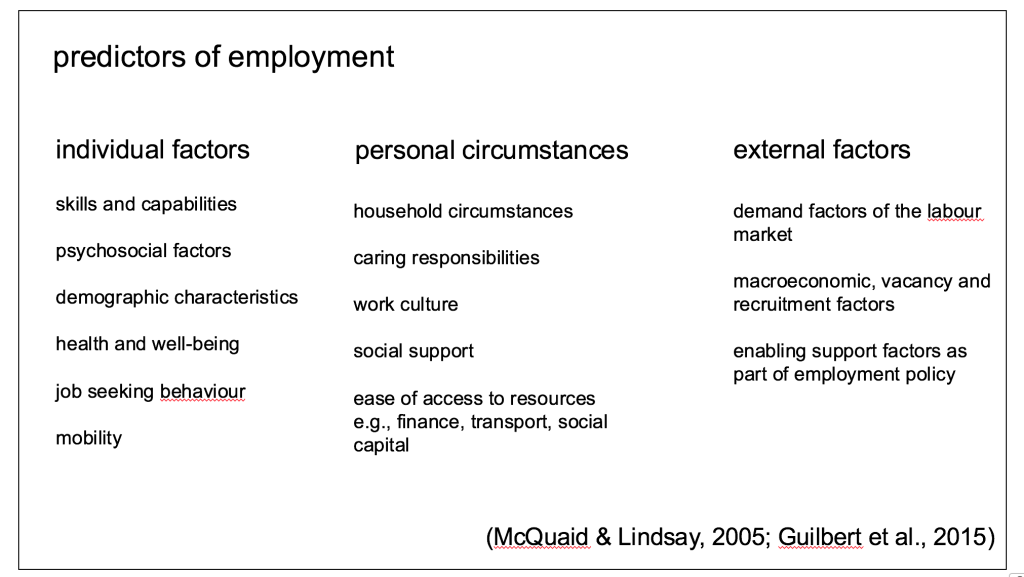
In the last few years, graphs of our declining graduate outcomes like the one above have been used to argue that universities need to be doing more to enhance our students’ employability. However, there are actually a wide range of stronger influences on whether a graduate is employed or not, including (as Tom Karmel points out) the degree of competition for entry-level jobs, and the availability of roles. In 2005, McQuaid and Lindsay published a theoretical framework – one of many – of influences on employability and employment, which they summarise as ‘individual factors’, ‘personal factors’, and ‘external factors’. The traditional remit of universities has been just one element of these: skills and capabilities, and perhaps also some psycho-social factors that can be learned, such as confidence, proactiveness and resilience.
I’d argue that there are indeed things universities can do, and can do better, to enhance their students’ employability (and also, while we’re at it, their citizenship and sustainability capabilities). But using graduate outcomes as the benchmark is leading universities to do things that are outside the traditional capability remit, in seeking to compete for one another for students — such as direct interventions around graduate recruitment, and changing the range and types of courses that they deliver to choose those with better short-term full-time employment outcomes. Universities with regional campuses in areas where there is higher unemployment are at a disadvantage in the benchmarking– and I would hate to see them move out of regions and stop offering degrees to people from diverse backgrounds because the graduate employment outcomes might be lower in these regions.
3. Short term, narrow outcomes.
In a context where our KPI is short-term, full-time employment outcomes, universities are more and more ‘teaching to the test’ — which means we are paying close attention to employer surveys where desired graduate employabiliy skills are listed out (interpersonal skills, written communication etc), and we are paying close attention to the skills that professional accrediting and registering bodies say that they need. The idea is to make graduates as ‘oven ready’ as they can be – both in terms of specific technical and disciplinary skills for their professions, and their transferable / generic skills.
One problem here is that the world of work is in massive flux. In teaching to specific outcomes, the danger is that we start encouraging narrow, inflexible career identities, and overly specific, short-term skills. When students graduate in 3 or 4 years’ time, there may not be the demand for (for instance) print journalists, primary school teachers, or graphic designers, and we need our grads to be able to reinvent themselves and their skills to find and obtain other meaningful work. We don’t teach enough for disciplinary and professional agility.
The CEDA (2015) study into the automation of Australian work suggests that over the next decade, more than 40% of existing job roles will disappear anyway (goodbye taxi drivers and telemarketers!). Other entirely new roles will be created — and while it’s difficult to predict exactly what these roles will be, we’re seeing this already in statistics coming from the US around new jobs in information security, big data analytics, and social media. Further, the roles that will remain are changing, and will require different skill sets. Work roles will require more digital capabilities, emotional intelligence, creativity and complex problem solving, and complex manual dexterity (these kinds of skills are less likely to be automatable).
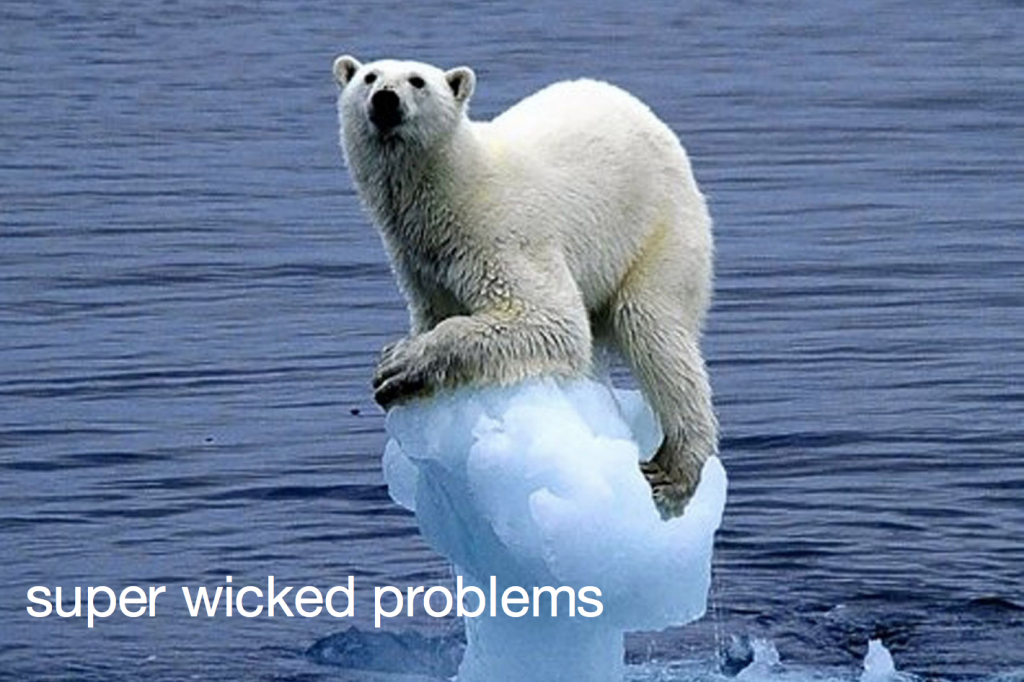
I also suggest that in this age of uncertainty and unprecedented social change and complexity, where we are confronted by more and more ‘super wicked problems’ — climate change, loss of biodiversity, antibiotic resistance, refugees and asylum seekers, widening gaps between the rich and the poor… and the list goes on — surely we need KPIs around capability development beyond employability skills. I read yet another article this morning about global catastrophic risk (nice reading to go with one’s cornflakes) that predicts our chances of destroying ourselves during the 21st century at about 50%. It’s hard to give exact probabilities on these kinds of things. However, the people who are graduating from our universities will lead our world in the coming decades — they need the capabilities to engage with and manage complex social, cultural, economic, and environmental challenges, as well as to find or create work and perform well in that work.
Photograph: Carla Lombardo Ehrlich/WWF
So, what should we be measuring?
Measurement and benchmarking is an inevitability in this space. It’s difficult to generate suitable, simple benchmarks for our graduate outcomes. I understand why full-time employment is used – it’s simple, and a good indicator of some things. However, we certainly need more nuanced, longer term outcome measures around employment, that embrace self-employment and the portfolio career as well as the metric of ‘short-term full-time work as an employee’.
We need to provide indicators around the actual capabilities that our graduates possess, and their behaviour (such as setting up their own enterprises, if that’s what we want). These indicators need to include capabilities beyond short-term employability skills, to encompass broader employment outcomes and the changing world of work. Finally, I think we need to include social, cultural, and environmental capability indicators, and those of critical thinking and learning, as well as employability skills.
In turn, we need the infrastructural, HR and policy supports in place so that our graduates are able to make the most of their capabilities. We need a labour market that can accommodate our skilled young people, and where they can make meaningful contributions.
——————————-
*the solution doesn’t seem to be to re-cap the number of places offered. In fact, Andrew Norton offers some interesting commentary about how limiting the number of places in courses actually results in worse labour market mismtaches than we have at present. He provides the example of the 1990s Government restrictive caps on medical student places, and points out that this resulted in widespread shortages of doctors, something that was eventualy mitigated by inviting many more overseas-qualified doctors to practice in Australia.
** I should note here that the graduate outcomes survey does include a measure of ‘part-time employment – seeking full-time employment’ — but it isn’t detailed enough to describe employment patterns.
Some of the most interesting findings from my fellowship interviews are actually about university stakeholder engagement and networks (or lack thereof), rather than student professional connectedness.
University approaches to external and internal stakeholder engagement are underdeveloped across the sector. Universities are still mostly taking short-term, ad hoc and often transactional approaches to working with our industry and community partners. While some universities do have stakeholder engagement strategies, these are often focussed on research and knowledge transfer, and they aren’t optimised for the mass teaching partnerships we are starting to embark upon.
In my interviews I heard many stories of great attempts to partner with industry for teaching that were thwarted by university systems and processes, or that only worked because they involved ‘guerrilla teaching practice’ outside our systems (you know what I’m talking about), and that may therefore be limited in scale and sustainability.
I heard about the challenges of working productively with partners across multiple organisational areas with multiple contact points and multiple different organisational processes. I heard variously about the risk of one person having all the contacts, the risk of sharing contacts with those who may not treat them sensitively, and the risk of the ubiquitous generic ‘contact us’ email address.
Perhaps most commonly, I heard about how we need to learn to value our partners in building long-term professional relationships for learning and teaching.
Some key questions for educators, program and university leaders in thinking about fostering our connectedness:
– who do we want our key industry and community partners to be, and what are we offering them in the long term? What value do we add?
– how are we valuing partner input in co-creating learning experiences for and with students?
– how can we ‘get out of our own way’, reduce institutional barriers to connectedness and improve engagement?
– who are our key contact points in the university for industry and community engagement? What kinds of resourcing and support do they need?
– how do we join up our engagement strategies and points of contact to improve consistency and quality of engagement?
– How do we manage the risk of engaging external partnerships at scale?
Some questions for educators:
I’m keen to know what your experiences have been with building your program / organisational area’s professional networks.
1. what does your university do well / not do well in supporting the development of your industry contacts and relationships for learning and teaching?
2. what motivations do industry and community partners bring to their partnerships with you, and what types of value does your program / university offer them?
3. how are your intra-university connections? How well connected are you with others within your university that are doing similar work / might have similar partners? How often do you experience the ‘left hand doesn’t know what the right hand is doing’ phenomenon with partners or partnership processes in your unversity? How do you navigate these challenges?
Send me an email if you like, or comment below if you dare… also I encourage those interested to join the GE2.0 community of practice, where there’s more info and discussion about these topics.
July was a busy month for me. I interviewed 43 people in different roles from a total of 26 Australian universities, to build a national picture of higher education engagement with learning and teaching for professional connectedness. The team have also profiled a number of humanities, arts and social sciences graduates and industry / community representatives across Australia to explore how professional connections and networks are important for success in 21st century work and life (more on these findings later).
Key findings of the higher education interviews
Australia wide, universities are stepping up to the challenge of fostering graduate employability through industry and community engagement. There is a national movement towards the development of university-wide employability strategies and infusion of employability skills and career development learning into all levels of the curriculum and elements of the university experience.
We are using a range of broad pedagogic approaches that support support the university-wide strategies, including: new models of WIL, alumni engagement, direct industry teaching, co-curricular facilitation and recognition, social media and professional identity building online, and connected learning.
We continue to struggle with the resource-intensiveness of effective industry engagement, and the scalability of our programs. The ad hoc approaches that used to work with a small number of students across a few programs and a few industry partners are proving less effective as we move into an era where 100% of our students will experience learning that is integrated with, related to, and/or otherwise connected with the world of work.
Some specific thoughts about students’ professional connectedness capabilities
learning for professional connectedness remains tacit and undervalued. Students are increasingly working with industry and community within and outside the curriculum, but often do not realise the importance of the connections they are making, or how to value, foster and extend those connections for future employability
we need to go beyond Linkedin profiles. Development of student professional identities online is key to employability, but employers are looking for more than simple Linkedin profiles and ePortfolios. How are students actively engaged with their online professional networks? Do they have industry authentic blogs, portfolios, social media presences? Are they interacting with the professional community in meaningful ways?
how are we supporting student networking? Many of our industry-engaged pedagogic strategies build a few strong professional connections. On average, students know only 1 employer when they graduate (often a WIL employer). How are we supporting our students to ‘network’ and grow their wider professional connections?
professionals use their social networks to learn, but universities tend not to promote this type of learning. There are substantial opportunities for students, universities and industry in ‘connected learning’, building learning communities and communities of enquiry around mutual areas of interest and practice. How can we start to build these broader communities and networks and learn from each other?
If you want to know more about what I’ve been finding in my interviews, head on over to the Graduate Employability 2.0 community of practice.
On Tuesday I gave a plenary presentation at QUT’s annual Higher Education Research Network symposium, to kick off my OLT Fellowship. Here it is summarised in pictorial form!! Completely delightful.
I promise that the third part of my series ‘the university of the future’ is still coming up! I got distracted… Over the weekend I read some documents about transferable skills, which reminded me that I had an idea for an article about them way back in 2007 around the time I was writing my ‘the graduate attributes we’ve overlooked’ paper. Here are some of the thoughts I was going to put into the paper I never managed to write.
For the last 20 or so years, the dominant way that universities have demonstrated their engagement with the graduate
employability agenda is through the notion of development of generic (aka transferable aka soft aka key) skills. By definition, these skills are non-task and non-context specific, and they are argued to enhance graduate employability by appealing to all employers. The argument is that once learned, these skills can be transferred from context to context – they can be applied across different subject domains. A few examples of generic skills include (there is no universally agreed list): written communication, teamwork, digital literacy, problem solving, and information literacy.
The generic skills approach is a simple one, and it has a lot of appeal. We teachers can map our curricula to demonstrate that we are teaching these skills through our programs; students can cite that they possess these skills when they develop their resumes; recruiters can easily find skills matches between job advertisements and applications; employers can be happy that they are employing graduates with the right kinds of skills.
The problem with all of this is that generic skills don’t actually exist. There is no such thing as a non-task, non-context specific skill.
Skills are learned in specific contexts and through specific tasks, and they are deployed in specific contexts through specific tasks. These specific skills that are acquired and deployed in specific contexts and tasks may have features in common, and this is what the generic skills approach does. However, to point to the presumed features in common to the exclusion of the specificities is what I would describe in an academic paper as ‘highly problematic’, and what I will describe here as superficial and dangerous. It lulls educators into a false sense that we’re covering off on the capabilities that are important, when in fact this is not necessarily the case.
It leads to the practice of context / domain / discipline ‘free’ skill development, which rather than being without domain/discipline/context (impossible!) asks students to learn generic skills in domains/disciplines and contexts completely alien to those in which they will be applying those skills in the future. Examples of this include generic written communication and information literacy courses one sometimes sees in foundational university programs. The challenges here are first that students can’t see the immediate relevance of, or have interest in, what they’re studying, so engagement tends to be lower. Second, they have trouble translating the skills they’ve learned into other contexts and applications later on. This translation is not a simple ‘transfer’ – it is a complex process involving assessment of which previous learning can simply be applied, what needs to be changed for the new context and how, and which entirely new things need to be learned and how. The process of translation is made much more difficult by greater differences between the specificities of the first context and the second.
The easiest way to build skills that employers are going to find appealing is to make the skill acquisition specificities as close as possible to the application and deployment specificities – or, put another way, make the learning activities as authentic as possible. This means that less translation is required between learning experience and work experience. However, students continually encounter new situations and tasks and will therefore need to engage in skills translation throughout their lives. No two learning/skill application contexts are the same. Therefore we must scaffold and support students to build what I’m calling skills translation bridges for themselves — that is, we must teach how the specific skills learned in one context can be translated for the specificities of a new context.
To what extent and how do you build skills translation bridges in your teaching?
Building a bridge between different skills contexts “Bridge” by Astrid Westvang is licensed under CC 2.0
In an age where learners can download all of the content they want for free, there is limited value in continuing to feed them a pre-digested, pre-prepared curriculum. The institutions that will thrive in our age of digital hyper-connectivity will do so because of the quality and depth of the learning experiences they offer, the relationships that they foster, the networks that they broker, and their bespoke content generation (research).
A few days ago I published part 1 of a post about the above quote. In the post I discussed higher education’s addiction to content. I talked about how teacher preparation and pre-digestion of course content is not only highly inefficient, it also runs counter to what we know about good pedagogic practice and the development of graduate capabilities such as information literacy and lifelong learning. I also implied that in the near future, as global market competition between universities heats up, continuing to focus on packaging content will not be a productive strategy (particularly if much of that content is available online at zero cost to the student anyway).
Imagine asking a student to describe the most exciting and interesting feature of their course. They are never going to say ‘the content’, and they’re never going to say, ‘the prescribed readings’. They are certainly never going to say, ‘the lecturer’s powerpoint slides’!
I’m not saying that we should do away with content, readings or powerpoint entirely. What I am saying is that in designing university courses for the future, we need to think carefully about what is going to attract and engage students, and what is going to yield the most valuable (and marketable, let’s be pragmatic here) learning.
Recently, I conducted a market research survey with more than 700 intending and existing students in my faculty. Inthe final section of the survey, I asked them to describe “the most amazing course ever”. The students could write whatever they wanted – and they did, with many giving me extended descriptions, learning approaches, and even fully thought out course titles.
I boiled down the 25,000 words I received from the students. The key elements of an amazing course turned out to be about:
(1) pedagogic approaches (‘hands on, minds on’ and a course that is personally meaningful / tailored to individual interests and needs),
(2) relationships (being part of a supportive, exciting community of learners, teachers and industry representatives), and
(3) being able to make tangible and positive contributions to the world.
This is the stuff I’m getting at when I say ‘the quality and depth of learning experiences’ and ‘the relationships that they foster’ in the quote at the beginning of this post. Incidentally, these are also some of the key features of optimal informal learning for professional development (Bridgstock, 2014). People tend to learn naturally by experiencing something that piques interest or poses a challenge. Often this experience is ‘hands on’ — the person is trying to do something, and through this process they discover that they need more information, or a strategy, or a specific skill. They then undertake research (broadly defined) to meet this need — they read, check online discussion groups, Google the topic, or wander into the next cubicle to ask their colleague. Thus, there is immediate, just-in-time relevance to the further learning that they are undertaking. Other ways that interest can be piqued is through informal discussion, reading magazines, surfing the web, or encountering new places. You get the idea.
A big point to make here is that no one is asking these people to memorise facts on faith that they might need them at some point in the future, or to acquire decontextualised skills that aren’t applied immediately. Human beings are actually really, really bad at learning using these approaches. However, this is exactly what we in universities ask students to do most of the time.
Right, so here are some questions for thought and discussion. I’m keen to know what you think.
– how do you approach learning when you are able to do it naturally?
– how do your approaches to informal / natural learning differ from your approaches to learning in formal contexts / courses that you have attended? How are they similar?
– what would happen if we designed courses where students were able to learn more naturally?
Re the last question, I wonder: is anyone (a) feeling a bit anxious that we wouldn’t cover the required content if we did this, or (b) worrying about how Timetabling might cope?? 😀 Ah the realities of teaching…
In my next post (part 3) in a few days I’m going to talk more about the ‘community’ and ‘network’ aspects of learning in the future university, picking up on the students’ responses about relationships being the second element of the most amazing course ever.
The ‘T-shaped person’ metaphor has been floating around talent management and education circles for nearly 25 years now. The basic idea is that professionals need to possess both depth of disciplinary knowledge and breadth of capability for collaboration across multiple disciplines – hence the vertical and horizontal strokes of the ‘T’. According to T proponents, traditional higher education programs tend to produce ‘I-shaped’ graduates – students who possess disciplinary capabilities, but lack collaborative, communication and boundary-crossing capabilities. The notion of the ‘T-shaped’ professional has grown in popularity over the last five years, with IDEO’s CEO Tim Brown coming out as a strong advocate for the idea, and T-Summit Conferences being held annually in the US higher education sector.
The T-shaped person
I know, I sound skeptical. Actually, those of you who have read my work would know that I’m all for capabilities that support transdisciplinary work (e.g., Bridgstock, Dawson & Hean, 2012; Bridgstock, 2013), which the ‘T-shaped’ movement is all about. There is also quite a lot of academic literature out there that suggests that increasingly, professionals need to collaborate effectively with people who have quite dissimilar backgrounds to themselves. In fact, these kinds of collaborations are more likely to produce innovative ideas and effective solutions to difficult problems than unidisciplinary approaches. When I’m teaching my first years about transdisciplinarity I often use the example of the groundbreaking 2010 article in Nature, where gamers using the ‘Foldit’ platform were able to identify the molecular structure of complex proteins in just a few weeks, when scientists had struggled with the problems for years using traditional methods.
The key-shaped person
Where I have an issue with the ‘T-shaped’ person metaphor is in the downward stroke of the T – the disciplinary depth. My research with successful innovators in various disciplines has shown that one downward stroke is nearly always not sufficient. Rather, highly successful 21st century professionals tend to be ‘key shaped’ – they possess several areas of disciplinary capability at different degrees of depth. They may have one very deep area of knowledge and skill, but it is accompanied by several others of varying depth as well. These areas of disciplinary expertise become the ‘teeth’ of the key.
There seem to be two main reasons that multiple areas of disciplinary expertise is advantageous. First, as the number of teeth on the key increase, they support and widen the horizontal stroke / spine of the key. Put another way, possessing disciplinary knowledge and skills in multiple fields supports the ability to translate knowledge, collaborate and work with others from dissimilar backgrounds and knowledge regimes.
Second, more ‘teeth’ on the key affords the individual their own unique transdisciplinary perspectives that support creativity, innovation and problem-solving, and promote employability. A molecular biologist who has some background in gaming or 3-D visualisation might well come up with an innovative way of solving protein structure problems. Similarly, think about the possibilities if you were an architect who has an interest in inorganic chemistry, or a civil engineer / physicist involved in designing and building a deep-space telescope.
Bibliography
Bridgstock, R. (2013). Professional Capabilities for Twenty‐First Century Creative Careers: Lessons from Outstandingly Successful Australian Artists and Designers. International Journal of Art & Design Education, 32(2), 176-189.
Bridgstock, R., Dawson, S., & Hearn, G. (2011). Cultivating Innovation through Social Relationships: A Qualitative Study of Outstanding Australian Innovators. Technology for Creativity and Innovation: Tools, Techniques and Applications. IGI Global.
Cheetham, G., & Chivers, G. (1996). Towards a holistic model of professional competence. Journal of European Industrial Training, 20(5), 20-30.
Gibbons, M., Limoges, C., Nowotny, H., Schwartzman, S., Scott, P., & Trow, M. (1994). The new production of knowledge: The dynamics of science and research in contemporary societies. Sage.
Khatib, F., DiMaio, F., Cooper, S., Kazmierczyk, M., Gilski, M., Krzywda, S., … & Foldit Void Crushers Group. (2011). Crystal structure of a monomeric retroviral protease solved by protein folding game players. Nature Structural & Molecular Biology, 18(10), 1175-1177.
Neuhauser, L., & Pohl, C. (2015). Integrating Transdisciplinarity and Translational Concepts and Methods into Graduate Education. In Transdisciplinary Professional Learning and Practice (pp. 99-120). Springer International Publishing.
*for a definition of WIL and some initial discussions around why I think we need to reinvent it, see my blog post from last week
I have argued elsewhere that in the real value in learning that the future university will provide students is not so much in the manifest curriculum content, apart from what we can offer through bespoke knowledge creation (research). Instead, what differentiates institutions will be the quality of the learning experiences we provide, and the industry/community networks we can offer. Creative faculties therefore need to start investing strongly in building relationships with industry and community, and fostering teacher capacity to teach creative enterprise as well as the capabilities associated with disciplinary practice. All three of the WIL models I propose below are predicated upon these investments, and also upon offering far more significant WIL provision than a single capstone 14-week experience. Actually, what I think I’m suggesting here is that these models could form the central learning experiences in a course.
(1) Offer internships with big, non-creative sector industry partners.
Here I borrow a little from successful Business School models of WIL, where the Faculty partners with big players (e.g., Deloitte or Ernst & Young) to offer a significant number of WIL opportunities each semester. The industry partner knows that by offering these internships that they have a direct recruitment pipeline to the best talent the university has to offer; in turn, the students get a high profile industry-based learning experience.
Where the creative internship model I propose differs from the Business School approach is that the creative students are embedded in non-cognate organisations. The Business School model involves, for instance, accountancy students heading over to Ernst and Young to work with other accountants on auditing, tax, and risk assessment. The creative faculty could, by contrast, partner with a very large firm (such as Westfield Group, Woolworths or Telstra in Australia), and send arts/graphic design, interactive and visual design, media and communications, interior design, and media production students to different areas of the firm for internships. As well as offering a pipeline for recruitment, the embedding of creative students into the organisation has the potential to increase the innovation capacity of the partner firm if it’s done right (Hearn & Bridgstock, 2014), as well as offering a relevant and enriching work integrated learning experience for creative students, who are quite likely to end up working in embedded roles in the future. The students experiencing this type of internship learn intrapreneurship, and how to work effectively with, and for, people who don’t come from their home creative discipline.
(2) Micro business and enterprise development.
We know that creative people are more likely than not to be self-employed to some extent. Most often, it’s also in these small ‘micro enterprise’ / start up situations where really innovative work goes on, rather than big (risk averse) firms. Micro-enterprise is becoming a much more common business model generally, through the growth of the sharing economy and ‘uberisation’ of professional services. However, many creative students do not regard themselves as entrepreneurial, and the majority of creative schools don’t teach for micro-enterprise development at all.
There is significant precedent for micro-creative enterprise learning in higher education, though (see, for instance, Rae 2012, or for diverse disciplines Culkin 2013), most often via coaching and mentoring, ideation, incubation and accelareration services, networking and resourcing support. In my own university, and co-located with the Faculty, we have a well-established creative incubator/accelerator, the only of its kind in the country, Creative Enterprise Australia. They offer a full range of startup support services, but there is actually very little overlap between their commercial activities and the faculty’s teaching.
Not all creative students will start their own businesses after graduation, but these learning opportunities are possibly the most effective way of developing true enterprise and entrepreneurship capabilities, disciplinary agility and students’ professional networks.
(3) Adopt a ‘teaching hospital’ model.
Neither of the previous two models represents a radical departure from what various universities have attempted previously, although they aren’t part of mainsteam teaching practice. Unfortunately, WIL tends to be highly time and resource intensive, and this means that creative faculties have trouble sustaining these kinds of experiments beyond special funded projects. This is where the third model comes in.
The third model involves embedding a creative enterprise into the heart of the creative faculty. This enterprise would provide commercial bundled creative products and services across art and design, digital, marketing, media/communications, performative and professional writing fields. In line with the key areas of growth in the creative economy, these products and services would target the Business-to-Business (B2B) market, but also would be able to support student micro-business development (model 2) and placements directly into non-creative firms (model 1) within it. The creative ‘teaching hospital’ should also encompass a non-profit arm, to support community engagement and social enterprise endeavours. It could support interdiscipinary collaborations with students and staff from other faculties.
In model 3 students learn through increasingly complex enterprise practice, supported and facilitated by academic and industry staff, and through legitimate peripheral participation models. This model has some resemblence to Vocational Education and Training models where, for instance, hospitality students learn through working at the institution’s cafe/restaurant. However, the key difference is in the capability types and complexity, the degree of criticality, theory and other contexualisation, and the emphasis on reflective professional practice. Students also end the program able to cite high level practice, real project outcomes and real clients. I’ve talked more about how learning in this model would work in my paper Educating for digital futures (Bridgstock, 2014).
Model 3 is the most risky of the three, but also has the most potential to yield big results. It requires redesigning the creative faculty around creative enterprise, including hiring industry practitioners and resourcing industry-ready practice. It also involves a radical change in curriculum and pedagogic practice for academic staff. There are also numerous ways that the teaching hospital model doesn’t fit within existing university structures (physical, procedural and policy). Some of these challenges may be surmounted by placing the enterprise to one side of the faculty rather than within it, with the university accrediting and providing qualifications on the basis of the learning experiences offered by the enterprise.
Yes, this is all a bit ‘out there’. I think it’s also the best way to build enriching, relevant learning experiences for creative students who are seeking employment outcomes (and to make a contribution to society and the economy). These models are also very different from mainstream practice in universities, and they have the potential to be highly marketable. In the case of models 2 and 3, there are revenue generation possibilities for the faculty in these models as well.
References
Bridgstock, R. (2014). Educating for digital futures: what the learning strategies of digital media professionals can teach higher education. Innovations in Education and Teaching International, (ahead-of-print), 1-10.
Culkin, N. (2013). Beyond being a student: An exploration of student and graduate start-ups (SGSUs) operating from university incubators. Journal of Small Business and Enterprise Development, 20(3), 634-649.
Lave, J., & Wenger, E. (1991). Situated learning: Legitimate peripheral participation. Cambridge University Press, Cambridge.
Rae, D. (2012). Action learning in new creative ventures. International Journal of Entrepreneurial Behavior & Research, 18(5), 603-623.